
Concept of Bhava in Yoga Abhyas: Why Your Inner State Matters As Much As Your Asana


Most yoga practitioners focus on what the body is doing. Is the spine long? Are the shoulders relaxed? Is the breath steady? These are important questions. But classical yoga asks a prior question: what is the mind doing while the body moves?
This is where Bhava comes in. Not as an abstract philosophical concept, but as a practical instruction embedded into every yoga practice.
What Is Bhava?
The Sanskrit word Bhava (भाव) means a state of being, feeling, or inner disposition. In the context of yoga, it refers to the specific mental and emotional quality that a practice is designed to cultivate, and that the practitioner is encouraged to consciously inhabit while performing it.
According to classical yogic knowledge, every yogic practice (every asana, pranayama, mudra, bandha, and kriya) has a particular effect on the mind. It naturally activates a specific inner state. When the practitioner consciously aligns their attention with that state while practising, the benefit of the practice deepens significantly. This is what the tradition means when it says yoga should be done with manoyog: total mental absorption.
The Eight Bhavas: Positive and Negative
Yoga identifies eight Bhavas in total: four positive and four negative.
Positive Bhavas: Dharma, Gyana, Vairagya, Aishwarya
Negative Bhavas: Adharma, Agyana, Raga, An-Aishwarya
When the negative Bhavas persist unchecked, through the influence of the Kleshas and Antarayas, they give rise to fear, guilt, anger, excessive attachment, and ego. Over time, these solidify into chronic negative mental states that are, according to yogic knowledge, the root cause of stress-related illness, psychosomatic disorders, metabolic dysfunction, diabetes, hypertension, and depression.
The goal of yoga is to systematically cultivate the four positive Bhavas and establish them firmly in the practitioner's mind, on and off the mat.
The Four Positive Bhavas and How They Live in Your Practice
1. Dharma Bhava: The State of Duty and Discipline

Dharma is duty/ Kartavya: the will to show up, to stay, and to follow through, especially when every part of you would rather not. This is where Dharma Bhava lives, and this is what makes it one of the most quietly powerful states in all of yoga.
In stillness practices, this becomes visceral. When you sit in Vajrasana or Sukhasana for an extended hold, the body grows restless, the mind starts bargaining, and the impulse to move rises. Staying anyway, grounded and present, is the practice of Dharma itself. Each moment of stillness chosen over restlessness is an act of will. Over time, this builds something durable: the capacity to act from duty, from inner steadiness, from a place deeper than mood or comfort.
This quality, cultivated on the mat, gradually becomes the way a person moves through life.
Key aspects: Regulation, discipline, self-direction, willpower, steadiness, responsibility.
Practices that cultivate it:
Any practice that asks the practitioner to remain still when the urge to move is strong will cultivate Dharma Bhava.
Meditative seated postures like Sukhasana, Padmasana, and Vajrasana are the clearest examples.
Yama and Niyama (Of Patanjali Yog Sutra as well as Hatha Yoga Pradipika), bring this same disciplining quality to the mind.
Pranayamapractices, and Trataka also gather scattered attention and fix it at a single point.
2. Gyana Bhava: The State of being informed

Gyana refers to knowledge. Classical yogic knowledge recognises two dimensions of this knowledge.
Bahirgyan (बहिर्ज्ञान) / Outer Gyana is the awareness of the world around us.
Antargyan (अंतर्ज्ञान) / Inner Gyana is the knowledge of one's own nature. The subtle movements of thought, emotion, and consciousness that reveal themselves only to a mind that has learned to be still. A life lived at full speed, pulled by sensation and demand, simply moves too fast for this knowledge to surface.
Yoga creates the conditions in which it can.
It is this inner knowing that becomes the ground of genuine spiritual growth. The mind reaches it through stillness, concentration, and the precise coordination of breath and movement.
Key aspects: Concentration, synchronisation of breath and movement, focus, and balance.
Practices that cultivate it:
Asana, which includes twists, turns, lateral stretches, elongations, forward and backwards bends, balancing, and inversions, cultivates Gyana Bhava by pulling the mind into the body.
In a twist, the stretch reaches the deepest layers of muscle. In a balance, the body falls the moment attention drifts. In an inversion the entire internal landscape shifts. Each posture creates a different quality of sensation, demanding attention, and together they build a complete inner knowledge of the body. This is how mindfulness gets cultivated, repetition by repetition.
Kriyas like Jalneti, Kapalbhati, Dhauti, and Trataka etc refine sensitivity to internal processes that ordinarily go unnoticed.
Pranayama and concentration practices train the mind to sustain this inward gaze, making present-moment awareness a cultivated capacity.
3. Vairagya Bhava: The State of Letting Go

Most human suffering does not come from what is happening. It comes from what we are holding. A memory that replays. An anticipation that tightens the chest. A face-off we keep revisiting in our minds. A version of ourselves we refuse to release. We hold these things not because they serve us, but because letting go feels like losing. The art of Vairagya begins the moment we recognise that releasing what no longer serves us does not make us less. It makes us lighter.
"Vairagya is not renunciation of life. It is the freedom to live it fully, without being imprisoned by it."
This quality of non-attachment has been the quiet objective across every path of yoga. The Karma Yogi acts with complete skill and is not motivated by the results. The Gyan yogi doesn't let the knowledge boost the ego. The Bhakti yogi completely surrenders to their deity. The form differs. The inner posture is the same.
Patanjali recognises this so fundamentally that he places Vairagya as one of the core values before any practice is even named. He offers this:
"Abhyasa-vairagyabhyam-tannirodhah" (Yoga Sutras 1.12) ||
The mind is steadied through consistency of practice and the attitude of non-attachment.
This is a very significant line to reflect upon. Because any practice, when it begins to work, produces results. And results feed the ego. Asmita, the ego-Klesha, is among the most subtle and stubborn of all inner obstacles. The practitioner who improves starts to compare, to identify with the achievement, to carry the practice as a kind of pride. Patanjali draws the boundary early: take any practice you choose, but take it with Vairagya, so the practice deepens you rather than inflates you.
Key aspects: Letting go, surrender, equanimity, non-attachment to outcome, inner freedom.
Practices that cultivate it:
In Hatha yoga, Vairagya finds its most direct physical expression through the exhale. The exhale is the breath of release, of emptying, of giving back. Every forward bend is performed on the exhale and has the capacity to connect to the idea of letting go.
Forward bends like Padahastasana, Paschimottanasana, and Shashankasana, etc., make this surrender tangible. What begins as a physical release gradually educates the mind in the same quality.
Pranayama practices that emphasise and extend the exhale carry this even further. Bhramari, Prana technique, and Bahya Kumbhaka create sustained moments of stillness and emptiness where the practitioner rests in a state of complete release, breath held gently outside, the body quiet, the mind beginning to follow.
Kapalbhati Kriya, Simha Kriya, and Agnisara Kriya are very significant, as they work on emptying and creating space before something new can come in.
Shavasana and Yoga Nidra bring Vairagya to its fullest expression, asking the practitioner to release even the effort of doing, and simply rest in pure being.
4. Aishwarya Bhava: The State of Inner Power
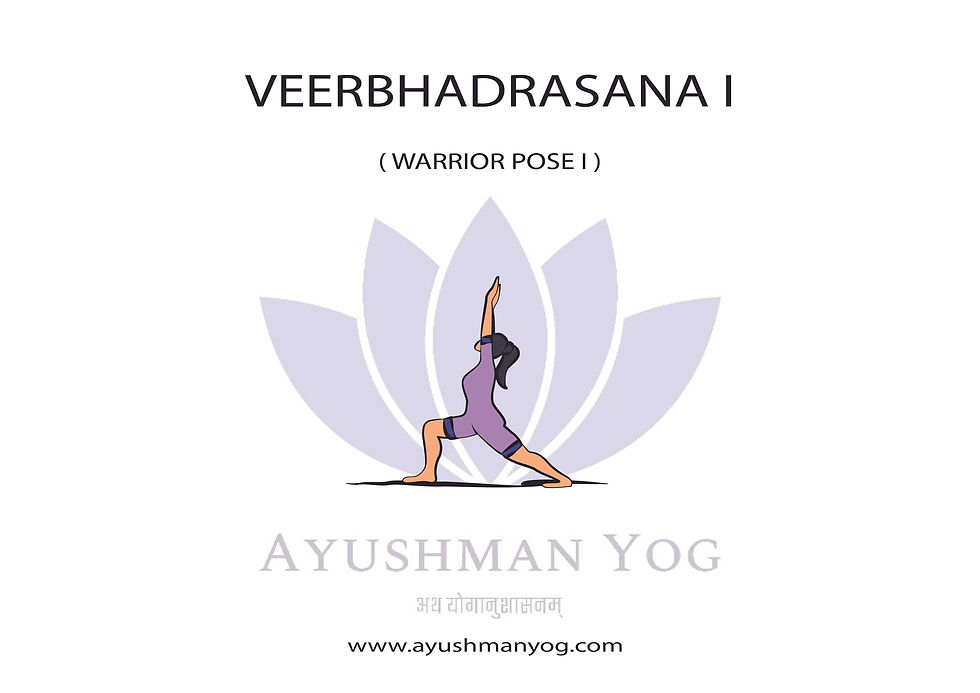
Aishwarya means sovereignty. Not the kind that is earned through achievement or granted through recognition, but the kind that is discovered within, already present, waiting to be felt. It is the deep sense of well-being that arises when a person connects, even briefly, to the fullness of their own nature. Self-worth rooted not in comparison but in being.
The chest is where this experience lives in the body. When the chest opens, the breath deepens, the spine lifts, and something in the person quietly rises with it.
This is not a metaphor. It is physiology meeting philosophy. The body, in that moment of expansion, sends a signal to the mind: there is capacity here. There is strength here. There is enough.
Yoga understands this relationship between posture and inner state deeply. Aishwarya Bhava is cultivated through practices that invite this opening, this expansion, this conscious inhabiting of one's own fullness. Practised consistently, this sense of inner dignity begins to move off the mat and into the way a person carries themselves through the world.
Key aspects: Self-worth, confidence, inner strength, resilience, self-realisation, conviction.
Practices that cultivate it:
Backbends and chest-opening asanas like Bhujangasana, Dhanurasana, and Veerbhadrasana 1 and 2 create a direct and immediate experience of Aishwarya Bhava. As the chest lifts and opens, the breath fills more completely, and the practitioner experiences a tangible sense of expansion and inner well-being.
Kriyas like Jalneti and Sutra Neti cleanse the nostrils. When you can breathe better, the inner lightness and clarity surface naturally.
Deep inhalation practices actively invite Aishwarya in. The inhale is the breath of receiving, of expansion, of drawing life fully inward. Pranayama practices that emphasise a conscious, complete inhalation train the practitioner to receive their own capacity, breath by breath.
One practice can have multiple bhavas associated with it. Reflect on it and start noticing.
Why This Changes Your Practice:
Here is a practical example. Shashankasana can induce Vairagya Bhava, but if it's only practised thinking about whether the back feels stretched or whether they are doing it correctly, then the awareness is on the surface of the practice.
This would mean practicing shashankasna as a physical posture; as a stretch alone, good, but not yogasana.
A practitioner who understands Vairagya Bhava enters the same posture with a different inner intention: to let go. To release the grip of effort, agenda, and judgment. To surrender, even briefly, the compulsion to control. The body posture is identical. But the neurological and psychological effects are significantly different. The parasympathetic nervous system activates more deeply. The nervous system genuinely rests.
Read: 10 Basic Yoga Poses Every Beginner Must Know (With Bhava)
Bhava Is Not for Advanced Practitioners Only
A common assumption is that philosophy comes after technique, that you first master the physical asana and then, years later, explore its inner dimensions. But this misunderstands how Bhava works.
Bhava is not an advanced layer added on top of the posture. It is the very orientation with which you enter the posture from day one. A beginner in Tadasana who holds Gyana Bhava (steady attention, quiet awareness of breath and balance) is practising more deeply than an advanced practitioner who executes the same pose on autopilot.
Yoga teachers should remind practitioners of the relevant Bhava repeatedly during class. Over time, these inner states cease to be something you recall during practice and become part of how you carry yourself through life, on the mat and off it.
Understanding Bhava is one thing. Knowing how to guide students into it, through sequencing, cueing, and conscious practice design, is the work of a trained teacher. The concept of Bhava in integrated in Ayushman Yog's YCB Level 1 Yoga Teacher Training. Cick to Explore the YCB Level 1 Teacher Training


Comments