
Yogic Sthula Vyayama: The Five Classical Movements from the Teachings of Dhirendra Brahmachari


What is Sthula Vyayama?
Movement in yoga carries many forms and many purposes. Sthula Vyayama is one of its most foundational, a classical system of preparatory practice that prepares the body, breath, and mind to receive deeper work.
Sthula, in Sanskrit, means gross.
Vyayama means exercise or movement.
A Sthula Vyayama is a compound movement, one in which more than one joint is engaged simultaneously. The arms, legs, spine, and breath move together as a coordinated whole, each part in conversation with the others.
Its counterpart, Sukshma Vyayama, works as isolated movements, single joints, and localized movements that mobilise and lubricate specific areas of the body. Sthula Vyayama works at the gross level, whole body, multi-joint, coordinated movement that awakens the entire system at once. Together, they form a complete preparatory system within the classical yogic tradition, designed to work in conversation with each other.
Five Movements, Complete Preparation
Dhirendra Brahmachari introduced five Sthula Vyayamas as a complete preparatory sequence, one that can serve as a warm-up within any yoga class. When introduced with a slower pace, their compound, whole-body nature makes them particularly valuable for senior practitioners. They are equally well-suited for obesity management and for the general strengthening of the body across all age groups.
The body carries the imprint of the day before practice begins. Accumulated tension, stillness, and a nervous system that has been in sustained engagement all arrive on the mat together. Sthula Vyayama creates the transition, warming and awakening the physical body at the compound level so that subtler practices can be received with full depth.
Each of the five movements is vigorous without being strenuous, structured without being mechanical, and inseparable from the breath. In the classical tradition, movement with breath awareness is the beginning of yoga.
The Five Movements of Yogic Sthula Vyayama
1. Rekha Gati: Linear Walking
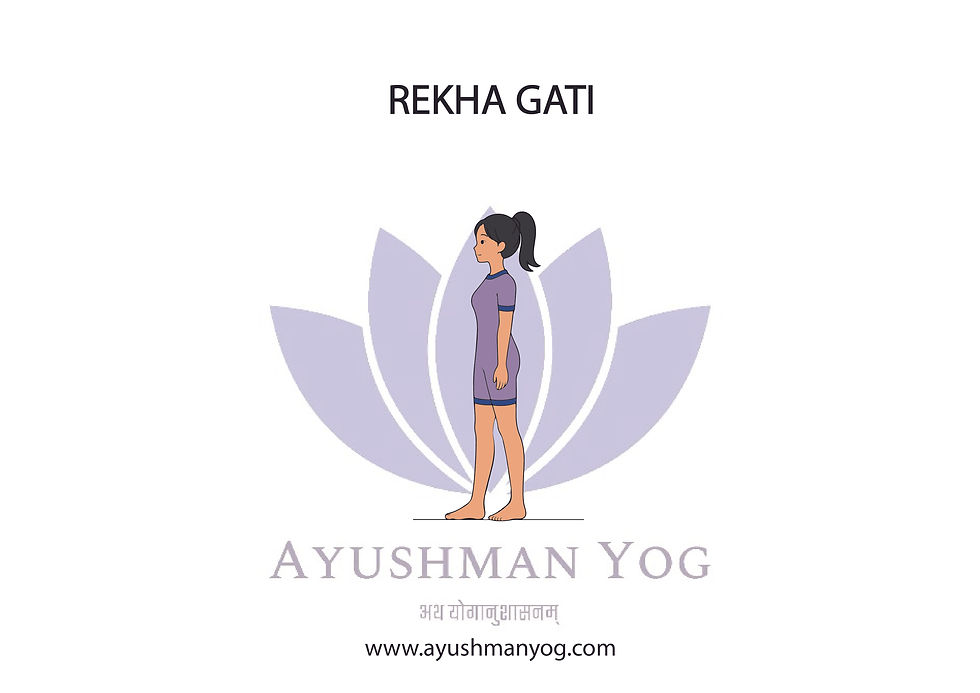
Starting Position:
Stand upright. Feet together, toes and heels aligned. Arms naturally at the sides. Gaze forward, chin parallel to the ground.
The Movement:
Walk forward in a straight line, heel to toe, with complete awareness.
As the right foot moves forward, the left arm swings forward naturally and vice versa.
This cross-body alternation is the heart of the movement.
The gaze remains fixed ahead. The spine stays tall. Each step is deliberate. Each arm swing is conscious. Walk forward along the line, then return along the same line, maintaining the same quality of attention throughout.
Breath:
Natural and continuous throughout. Attention rests on the quality of movement.
Benefits:
Rekha Gati builds postural integrity from the ground up. The heel-to-toe movement trains the entire kinetic chain, from feet through ankles, knees, hips, and spine.
The cross-body arm swing activates the shoulder girdle and trains the natural movement pattern that supports spinal health and nervous system balance.
Brahmachari noted this practice as particularly valuable for professions requiring sustained physical alertness. A body that walks with awareness stands with awareness, and a body that stands with awareness can sustain effort over time.
Contraindications:
Rekha Gati is a gentle and accessible movement for most practitioners. Those with neurological conditions affecting coordination and gait, such as Parkinson's, post-stroke recovery, or multiple sclerosis, are advised to practise with supervision, as the forward gaze removes the visual grounding that many rely on for stability.
2. Hridaya Gati (Engine-daud): The Engine Movement-
Hridaya means heart. Engine-daud is a reference to the piston action of a steam engine. Both names are accurate.
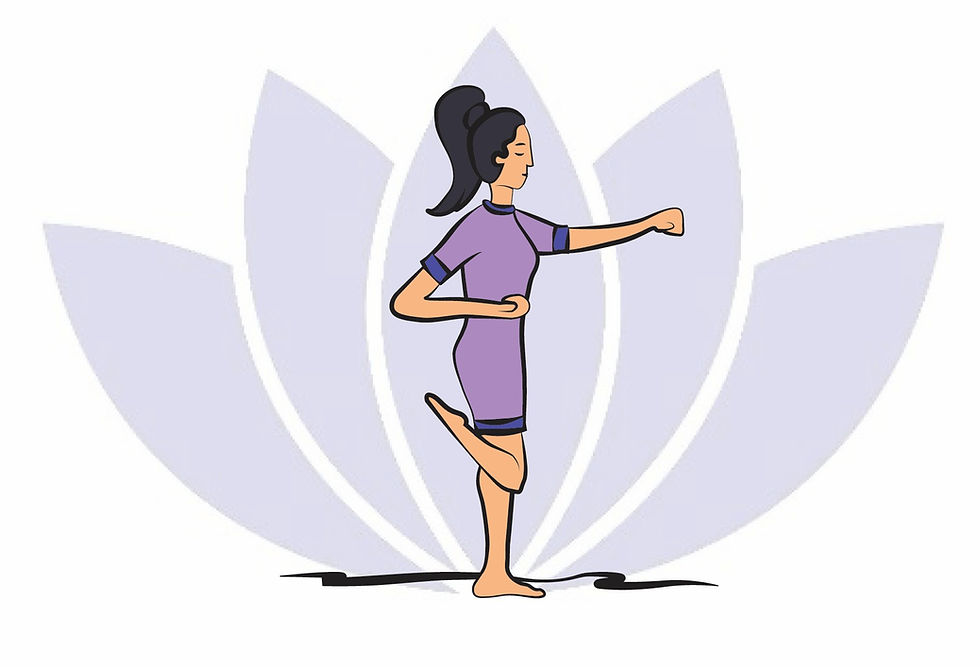
Starting Position:
Stand upright, feet together or slightly apart. Arms at the sides, fists loosely closed.
The Movement:
The right heel strikes the ground firmly while the left arm swings forward and bends at the elbow toward the chest.
Then the left heel strikes as the right arm swings to the chest.
The movement alternates continuously, building gradually in pace until it carries the even, rhythmic quality of an engine in motion.
Both sides receive equal work. Both arms swing to the same height. Both heels strike with the same force.
Breath:
Nasal breath, Natural and continuous. As the pace builds, the breath deepens naturally.
Benefits:
Hridaya Gati activates the cardiovascular system effectively and quickly.
The sustained rhythmic quality builds endurance, the capacity to maintain steady effort over time.
Brahmachari considered this practice specifically beneficial for the heart and circulatory system.
Contraindications:
Active knee or ankle injuries, as the heel strike creates percussive impact through the joints.
Severe varicose veins, as the repeated heel striking may aggravate the condition.
Those with recent lower limb surgery or fractures.
3. Utkurdan: Yogic Jumping
Starting Position:
Stand upright, feet together. Both fists loosely clenched at the sides of the thighs. Spine tall. Gaze forward.
The Movement:
With an inhalation, both arms swing back behind the body simultaneously. In one coordinated movement, both arms sweep forward as the body lifts from the ground, the arms coming forward and up toward the chest as the jump completes.
The landing is soft and controlled, and immediately prepares for the next repetition.
Brahmachari recommended beginning with five repetitions and building gradually to twenty-five over time.
Breath:
Inhalation powers the upward movement. The breath initiates the jump, not the legs alone.
This conscious connection between breath and physical effort is what makes Utkurdan a yogic practice.
Benefits:
Utkurdan builds chest capacity and respiratory strength. The breath-jump coordination trains the diaphragm powerfully, builds lower limb bone density, and creates a full-body cardiovascular response that is both brief and complete.
The progressive repetition count Brahmachari specified reflects his understanding of the body as something to be introduced to challenge gradually and respectfully.
Contraindications:
Knee or hip joint conditions, as the jump and landing place load on these joints
Osteoporosis, where high-impact movement carries risk
Third trimester of pregnancy, or any stage where abdominal pressure is contraindicated
4. Urdhva Gati: Upward Movement
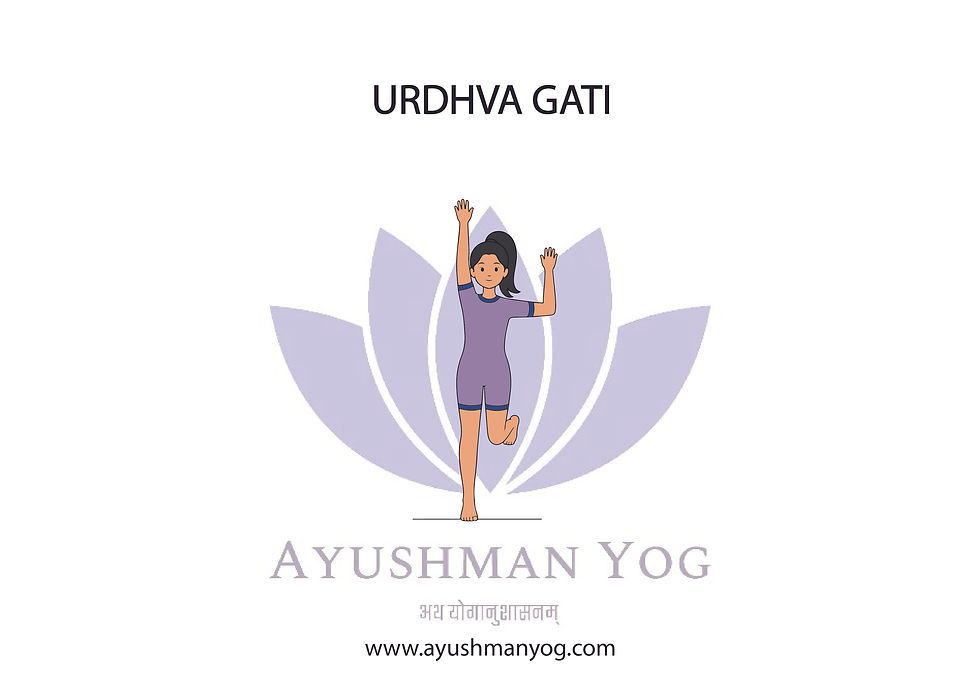
Starting Position:
Stand upright, feet approximately one foot apart. Arms at the sides. The body is balanced and grounded.
The Movement:
With an inhalation, the right arm swings upward while the left foot lifts simultaneously from the ground to approximately one foot in height.
The body balances on the right foot, right arm reaching overhead, creating a full elongation of the entire right side of the body.
On exhalation, both return to the starting position.
The movement then alternates, left arm rises as the right foot lifts. Breath and movement remain fully coordinated throughout.
Breath:
Inhalation with the upward movement. Exhalation on return.
Benefits:
Urdhva Gati works the body along its vertical axis.
The single-leg balance trains proprioception, ankle stability, and the deep postural muscles of the spine. The reaching arm creates a lateral elongation of the entire side body, opening respiratory capacity with each repetition.
The combination of balance, full reach, and coordinated breath in a single flowing movement makes Urdhva Gati one of the most integrative of the five practices.
Brahmachari noted wide-ranging benefits across all body systems.
Contraindications:
Acute vertigo or balance disorders, as single-leg standing is central to the movement
Recent ankle sprains or ligament injuries
Severe sciatica, where the lateral elongation may aggravate nerve tension
5. Sarvang Pushti: Complete Body Strengthening
Sarvang means complete. Pushti means nourishment and strengthening.

Starting Position:
Stand with feet together, spine upright. Both fists held at the level of the thighs, knuckles facing forward.
The Movement:
Raise both arms overhead and interlock the fingers.
Inhale and arch gently back, the spine drawing a soft half-C.
On the exhale, fold forward and to the right, bringing the forehead toward the right knee.
Inhale back through the half-C, then exhale forward to the left knee.
This completes one round. A minimum of 10 rounds is recommended, maintaining breath and movement as one continuous, fluid arc throughout.
Breath:
Full inhalation throughout the entire circular arc.
Exhale as you bend forward.
Benefits:
This movement works the body as an integrated whole, shoulders, arms, chest, spine, core, and lower limbs all engaged within a single flowing arc.
Brahmachari noted specific benefits for the blood vessels, bones, and the strength of the lumbar region.
The full circular arm movement mobilises the shoulder joint through its complete range of motion.
Contraindications:
Frozen shoulder or acute rotator cuff injuries, as the full circular arm arc requires complete shoulder mobility
Severe lumbar disc conditions, where the backward arm sweep and spinal extension may be contraindicated
Uncontrolled hypertension, as the sustained full inhalation and arm overhead movement may temporarily raise blood pressure
The Sequence as a Whole
These five movements form a sequence, and the sequence carries its own intelligence.
Rekha Gati grounds and awakens the body.
Hridaya Gati activates the cardiovascular system and builds bilateral rhythm.
Utkurdan introduces full body effort and breath power.
Urdhva Gati refines balance and opens the vertical dimension.
Sarvangi Pushti integrates everything in a complete, whole-body arc.
Practiced with consistency, with genuine attention to the breath, these five movements prepare the body in a way that supports everything that follows: asana, pranayama, or any other formal practice. This is a preparation system with its own depth, its own intelligence, and its own place within the larger architecture of classical yoga.
Join the Sukshma Vyayama self-paced video course to understand the technique correctly.
Learn Sthula Vyayama with Correct Technique
Reading about Sthula Vyayama is a beginning. Seeing it demonstrated with correct breath coordination, understanding the common errors, and feeling these movements in your own body, that requires something more.
At Ayushman Yog, our Sukshma Vyayama self-paced video course covers the classical preparatory practices of the yogic tradition, including Sukshma and Sthula Vyayama,the both, with detailed video instruction, step-by-step technique guidance, and the traditional context behind each movement.
Whether you are deepening your personal practice, preparing for YCB examination, or building your confidence as a yoga teacher, this course offers a genuine and accessible foundation in these classical practices.
This blog is part of the Classical Yoga Masters series at Ayushman Yog. Read our related blogs for the category: Classical Yoga Masters
All technique references in this blog are drawn directly from Dhirendra Brahmachari's original manuscript on Yogic Sukshma Vyayama.


Comments